|
|
|
"Anyone can drive it, but can you make ice?"
|
 |
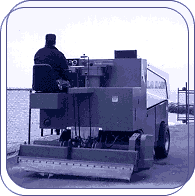
Resurfacing the ice consists of a few basic steps: the machine scrapes the ice with a sharp blade, creates new ice with 192 gallons of ice making water, fills in ruts with 72 gallons of recycled wash water, and smoothes the surface with a towel. Operation of the resurfacer is complicated because many external factors affect the condition of the ice. The Zamboni driver is constantly concerned with where he is on the rink, adjusting the flow of water and the height of the blade. Humidity, drafts, and body heat all affect the ice. In an outdoor rink, the ice is at the mercy of the elements. It is also crucial to maintain and create an even level of ice, ideally 3/4"-1 1/2" high. Resurfacing prevents chipping and other "bad" ice that makes the hockey puck bounce and ice skaters unhappy. |
|
Zamboni Basics 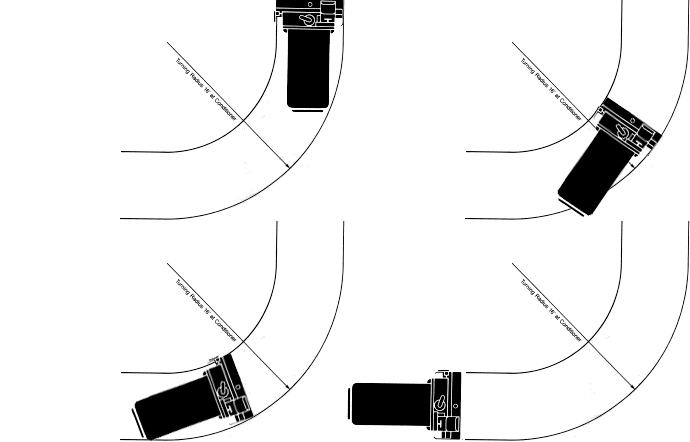
Vital Stats of the popular Model 500: |
||
Engine: Volkswagen 1.8 liter 63 HP @ 3000 RPM NET Load sensing governor enables true "hands-free" operation by driver Hydraulics: Double-pump for vertical and horizontal augers Turning Radius: 6 ft (4.86m) At Conditioner Shaving Blade: 1/2" x 5" x 77" (1.27 X 12.7 X 195.6 cm) |
Drivetrain: Four wheel drive Front Axle: 4300 lbs (1950 kg) Rear Axle: 6400 lbs (2903 kg) Weight: Empty 6480 lbs (2939 kg) w/ water 8680 lbs (3937 kg) Size With snow tank raised: Height 154 in. (3.91m) Length 198 in. (5.03m) Width 84 in. (2.13m) |
|
  
|
||