
|
|
"Teaching someone to |
 |
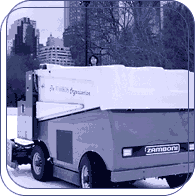
Central Park Zamboni Driver : José Soto The machine in New York City's Central Park is a Zamboni model 700. It is light blue and white. It is BIG. The outdoor rink is shaped like an acorn; it too, is BIG. "This is a rink -- this is bigger than a hockey rink," says José Soto, senior driver at Central Park. He's proud of the ice and the job he does in Central Park; of the facilities and equipment at Rockefeller Center, he sniffs good-naturedly, "Number one, the machine there is electric. Number two, that's not a rink, that's a puddle of water." For José, "it takes 30-35 minutes to cut the ice and to lay water. It could take as little as 15 minutes, but the longer you take, the better the ice surface is. There is no time pressure; no required time it takes to resurface the area." Tell that to the guys at Madison Square Garden. 
|
|
Rules of the rink: Every ice job matters. Loop around to the middle and begin your pattern. Ice is generally more even in the center of the rink. Focus on a point on the other side of the rink. Try to keep straight lines. Reduce water around the corners and along the crease. No speed demons allowed. The basic driving pattern is a clockwise motion of slightly overlapping ovals. In a regulation-size rink of 200' x 85', the perfect ice job should take seven to seven and a half laps. Among some drivers, missed spots are called "vacations" or "holidays," depending on the size of the gap. |
||
  
|
||